Is polished concrete slippery? Properly finished polished concrete typically tests in the 0.49 to 0.58 wet DCOF range, exceeding the ANSI A137.1 minimum of 0.42 for level wet areas. That puts it ahead of polished porcelain tile and finished hardwood, both of which can fall below the ANSI threshold when wet. Coating Designs installs and maintains polished concrete for Orlando businesses and homeowners with safety as the baseline specification.
Orlando averages up to 53 inches of rainfall annually, most of it arriving in sudden afternoon downpours between June and September. Every one of those storms means tracked-in water across commercial entryways and residential foyers. That rainfall pattern makes slip resistance a daily concern rather than an occasional one, and it explains why Orlando businesses need specific maintenance protocols that northern facilities can skip.
Polished Concrete Slip Resistance by the Numbers

Slip resistance is measured by the dynamic coefficient of friction (DCOF) using ANSI A326.3 testing methodology, the standard referenced in ANSI A137.1 for hard-surface flooring. Here’s how polished concrete compares to common flooring materials when wet:
- Polished concrete (per ANSI A137.1): 0.49–0.58 wet DCOF
- Polished/glazed porcelain tile: Often below 0.42 wet
- Glazed ceramic tile: Varies widely by finish; textured varieties exceed 0.42
- Finished hardwood: Typically slippery when wet; not commonly DCOF-tested
- VCT: Highly dependent on wax/polish state
ANSI A137.1 requires a minimum 0.42 DCOF for interior areas likely to be wet. Treated polished concrete exceeds that threshold when properly maintained with anti-slip conditioners.
What Makes Polished Concrete Slippery in Orlando
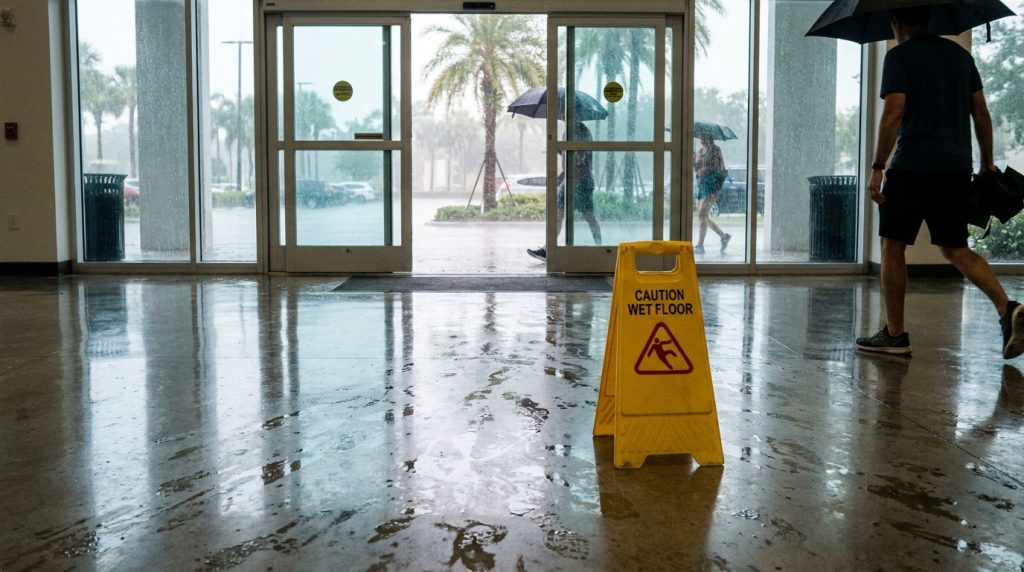
Polished concrete doesn’t become slippery because of the polishing itself. Slip hazards come from what accumulates on the surface:
- Tracked-in rainwater: Orlando’s daily summer storms send customers through entryways with wet shoes. Water pooling on polished concrete reduces traction at the entry zone, not across the entire floor.
- Dust and fine debris: Concrete dust, pollen, and fine sand create a micro-layer between shoes and floor. Regular dust mopping eliminates this. Skipping maintenance for even a few days in high-traffic areas creates risk.
- Improper cleaning products: Wax-based or oil-based cleaners leave residue that reduces DCOF significantly. Only pH-neutral, residue-free cleaners should touch polished concrete.
- Worn densifier treatments: The lithium silicate densifier that hardens and seals polished concrete wears down in high-traffic lanes over time. Reapplication on a regular schedule maintains both the surface hardness and the slip resistance.
How To Maintain Safe Traction on Polished Floors

Maintaining slip resistance on polished concrete requires a proactive approach rather than reactive fixes:
Daily Maintenance
Dust mop with a microfiber pad to remove fine particles that reduce traction. In high-traffic commercial spaces, this should happen twice daily. For Orlando and Winter Garden businesses with exterior entrances, place absorbent matting at least 6 feet deep at every door to capture rainwater before it reaches the polished surface.
Weekly and Monthly Protocols
Wet mop weekly with a pH-neutral cleaner formulated for polished concrete. Avoid vinegar, citrus-based, or ammonia cleaners that degrade the densifier and reduce slip resistance over time. Monthly, inspect high-traffic lanes for wear patterns and apply anti-slip conditioner to areas showing reduced sheen, which indicates densifier wear.
Annual Professional Service
Schedule annual professional polished concrete maintenance to re-densify worn areas, burnish traffic lanes back to specified sheen, and conduct DCOF testing to verify slip resistance meets ANSI standards. Coating Designs provides maintenance programs for Orlando commercial clients that keep floors above 0.50 DCOF year-round as an additional safety margin.
Frequently Asked Questions
Is polished concrete more slippery than tile?
No. Treated polished concrete typically tests in the 0.49 to 0.58 wet DCOF range, well above the 0.42 ANSI minimum, while polished or glazed porcelain tile often falls below that threshold. Polished concrete provides better wet traction than most common flooring alternatives when maintained with proper densifier treatments and residue-free cleaning products.
Do I need anti-slip mats on polished concrete?
Absorbent entrance matting is recommended at exterior doorways to capture tracked-in water, especially during Orlando’s rainy season. Beyond entry zones, properly maintained polished concrete doesn’t require additional mats or treatments across the general floor area to meet ANSI slip-resistance standards.
How often should polished concrete be re-treated for slip resistance?
High-traffic commercial spaces benefit from densifier reapplication every 12–18 months in heavily used lanes. Residential polished concrete typically needs re-treatment every 3–5 years. Coating Designs tests DCOF during annual maintenance visits and re-treats only the areas that have dropped below safe thresholds.
Make Your Polished Floors Safe for Every Visitor

Polished concrete isn’t inherently slippery. It outperforms tile and hardwood in wet traction testing. The safety risk comes from neglected maintenance, improper cleaning products, and worn surface treatments, all of which are preventable with the right protocols.
For Orlando businesses concerned about liability or homeowners wanting the look of polished concrete without the worry, contact Coating Designs for a free consultation on installation or maintenance. We’ll test your existing floor’s slip resistance and recommend the right maintenance program for your traffic level and layout.

Reinaldo Morera is the founder of Coating Designs in Orange County, FL. Specializing in advanced concrete coatings and decorative finishes, Reinaldo combines innovative technology with expert craftsmanship to transform ordinary floors into extraordinary spaces. He is a trusted local voice for those looking to enhance their property with resilient, low-maintenance flooring.