How to clean an epoxy garage floor: sweep or vacuum loose debris first, then mop with warm water mixed with a pH-neutral cleaner or mild dish soap at 1–3 ounces per gallon. Rinse with clean water and let dry. This method removes dirt, tire marks, and grime without degrading the epoxy coating. Coating Designs recommends this routine for all Orlando garage floor installations.
May marks the start of Florida’s rainy season, and that means more tracked-in mud, pollen, and standing water reaching your garage floor over the next five months. Starting a cleaning routine now, before the daily afternoon storms arrive, prevents buildup from bonding to the coating surface and keeps maintenance quick through October.
What You Need to Clean an Epoxy Garage Floor
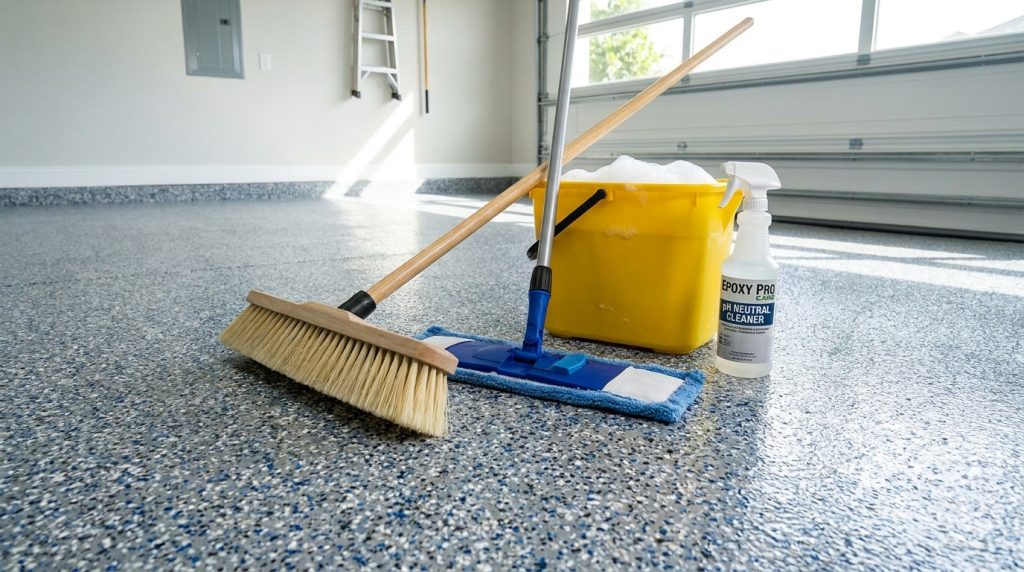
Epoxy floors require minimal equipment. Most Orlando homeowners already have everything they need:
- Soft-bristle broom or dust mop: For daily or weekly dry sweeping. Avoid stiff bristles that can micro-scratch the topcoat over time.
- Microfiber flat mop: Better than string mops because they don’t leave excess water pooling in low spots. Microfiber also picks up fine grit that cotton mops push around.
- pH-neutral cleaner: Simple Green diluted at 1 ounce per gallon, or a few drops of Dawn dish soap in warm water. Avoid anything with ammonia, vinegar, or citrus.
- Garden hose (optional): For garages with floor drains, hosing down the floor after sweeping is the fastest deep-clean method. Not recommended for garages without drainage.
Step-by-Step Cleaning Process
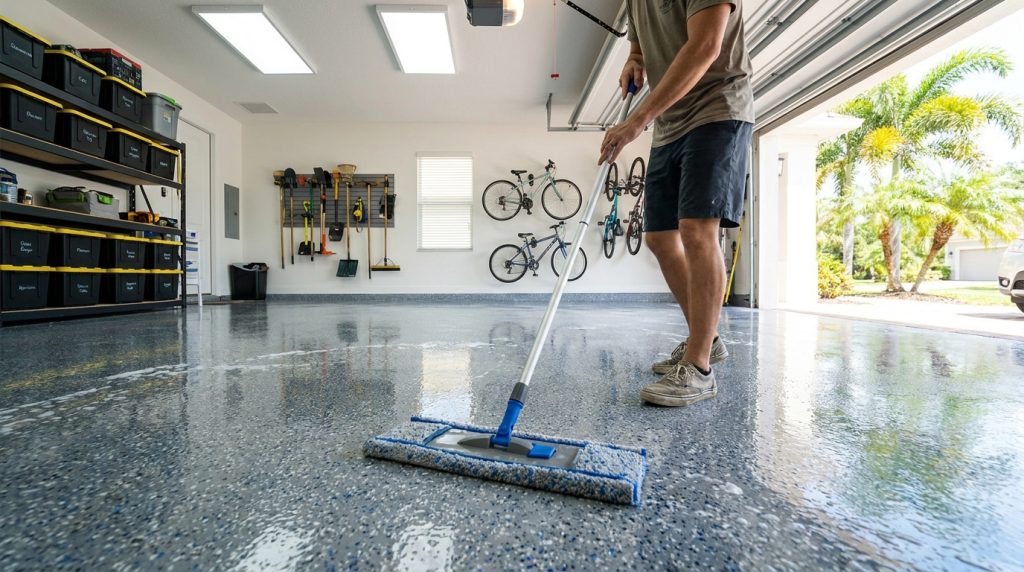
Follow this sequence for routine cleaning that keeps your epoxy floor looking new:
Weekly Maintenance (5–10 Minutes)
Sweep the entire floor with a soft-bristle broom or dust mop to remove sand, grit, leaves, and debris. Pay extra attention to the area where tires park, as brake dust and road grit concentrate there. In Davenport and Orlando homes near sandy soil, sweep twice weekly during dry months when fine sand tracks in more heavily.
Monthly Deep Clean (15–20 Minutes)
Fill a bucket with warm water and add 1–3 ounces of pH-neutral cleaner or a tablespoon of mild dish soap. Mop the floor in sections, working from the back wall toward the garage door. Let the solution sit 3–5 minutes on any stubborn tire marks or oil spots, then mop again. Follow with a clean-water rinse mop or hose off if you have a drain. Allow to air dry or use a squeegee to remove standing water.
Stain-Specific Treatment
For oil or grease spots, apply a small amount of undiluted pH-neutral degreaser directly to the stain. Let it dwell for 5–10 minutes, then scrub gently with a soft nylon brush and mop clean. For tire marks that resist normal mopping, a magic eraser or soft scrub pad works without damaging the topcoat. Never use metal scrapers or wire brushes.
What To Avoid on Epoxy Floors
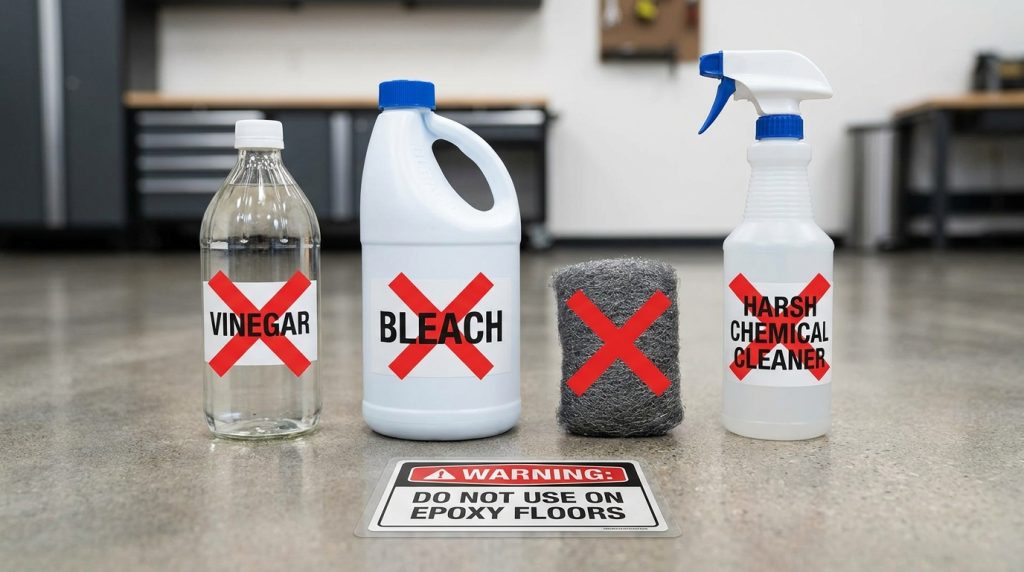
Using the wrong products accelerates wear and can void your coating warranty. Avoid these common mistakes:
- Vinegar or citrus cleaners: Acidic solutions etch the polyaspartic or urethane topcoat, dulling the gloss and reducing stain resistance over time.
- Ammonia-based products: Ammonia creates a hazy film on epoxy surfaces that builds with repeated use and requires professional buffing to remove.
- Abrasive pads or steel wool: These scratch through the clear topcoat and expose the colored base layer to UV and chemical damage.
- Pressure washers at close range: High-pressure water directed at seams or edges can force moisture beneath the coating and cause delamination. If using a pressure washer, keep the nozzle 12-plus inches from the surface and use a wide fan tip.
Frequently Asked Questions
How often should I clean my epoxy garage floor in Florida?
Sweep weekly and deep-clean monthly for most Orlando garages. During rainy season (June through October), increase sweeping to twice weekly because tracked-in mud and organic debris accumulate faster. Homes near construction zones or unpaved roads may need more frequent attention.
Will a pressure washer damage my epoxy floor?
A pressure washer is safe at low pressure (under 1,500 PSI) with a wide fan nozzle held 12 or more inches from the surface. Avoid aiming concentrated streams at coating edges or any areas with visible chips. For most routine cleaning, a mop and bucket works better and carries zero risk.
Can I use bleach to clean mold off my garage floor coating?
Diluted bleach (1 part bleach to 10 parts water) can be used occasionally for mold or mildew spots without damaging the coating. Rinse thoroughly afterward. Avoid using bleach as a routine cleaner because repeated exposure degrades the topcoat’s UV resistance over time.
A Clean Floor Lasts Longer Than a Neglected One

A garage floor coating is one of the cheapest things to maintain and one of the most expensive to replace. Fifteen minutes of monthly upkeep keeps the topcoat intact for a decade or more. Skipping that same fifteen minutes wears the surface down to bare epoxy in three years. Grit left sitting becomes sandpaper under tires. Chemical spills left overnight eat into the topcoat. Both problems are preventable with a broom, a mop, and the right cleaner.
For Orlando homeowners with questions about their specific coating or maintenance schedule, contact Coating Designs for guidance. If your floor already shows wear or damage, a professional evaluation can determine whether a topcoat refresh can extend the lifespan of an epoxy-coated floor or whether a full recoat makes more sense.

Reinaldo Morera is the founder of Coating Designs in Orange County, FL. Specializing in advanced concrete coatings and decorative finishes, Reinaldo combines innovative technology with expert craftsmanship to transform ordinary floors into extraordinary spaces. He is a trusted local voice for those looking to enhance their property with resilient, low-maintenance flooring.