Restaurant epoxy flooring in Orlando must meet Florida’s Division of Hotels and Restaurants requirements for seamless, non-porous, grease-resistant surfaces that can withstand daily chemical cleaning. Professional commercial kitchen coatings typically cost $5 to $12 per square foot installed and last 10-plus years under heavy foot and cart traffic. Coating Designs installs food-safe epoxy systems for Orlando restaurants that pass health inspections on the first visit.
A restaurant owner on International Drive called after failing a health inspection over cracked grout lines with trapped grease in their kitchen tile floor. The inspector flagged it as a harborage point for bacteria. Ripping out tile and re-grouting would have closed the kitchen for two weeks. A seamless epoxy overlay went down in one day, passed reinspection the next morning, and eliminated the grout-line problem.
What Health Codes Require for Restaurant Floors in Florida
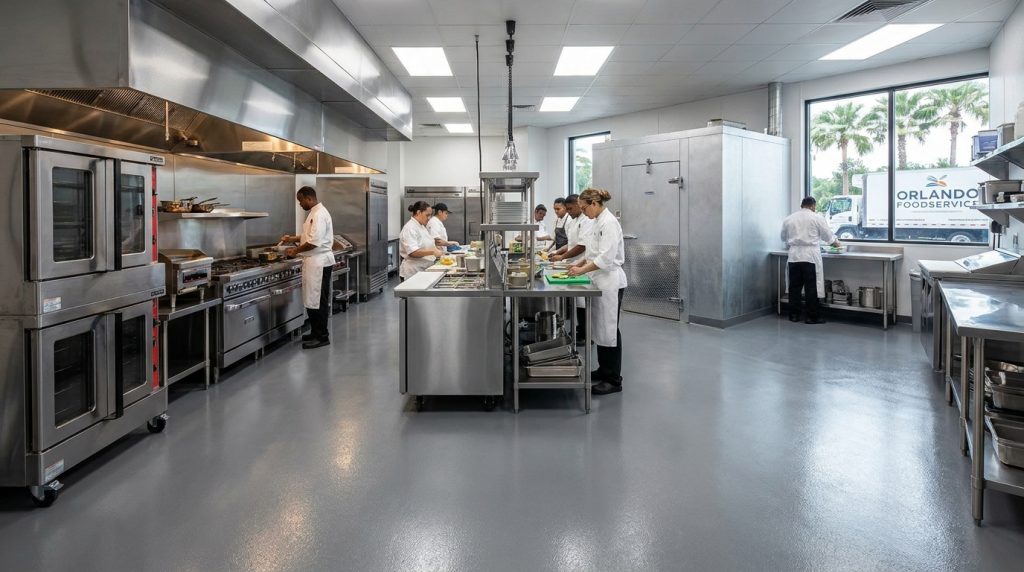
Florida Administrative Code 64E-11 and the Division of Hotels and Restaurants require commercial kitchen floors to be smooth, non-absorbent, and easily cleanable. Grout lines, cracks, and porous surfaces fail inspection because they trap organic material that harbors bacteria.
Specific requirements that affect flooring choices:
- Seamless surface: No grout lines, seams, or joints where food particles and grease can accumulate. Epoxy provides a monolithic surface that eliminates these harborage points.
- Non-porous and grease-resistant: The floor must resist penetration from cooking oils, cleaning chemicals, and food acids. Epoxy’s chemical resistance handles all three.
- Coved base at walls: Floor-to-wall transitions must be coved (curved) rather than squared off. Epoxy cove base eliminates the 90-degree angle where debris collects.
- Slip resistance when wet: Kitchen floors must maintain traction under grease, water, and food spills. Textured epoxy systems meet this without creating surfaces too rough to clean.
How Epoxy Meets Commercial Kitchen Standards

Commercial-grade epoxy creates a resinous barrier between kitchen activity and the concrete slab beneath. Unlike residential garage epoxy, restaurant-grade coatings are formulated for chemical exposure from degreasers, sanitizers, and acidic foods that would dissolve standard coatings.
The system typically includes three layers: a moisture-mitigating primer that prevents delamination from slab vapor, a self-leveling epoxy body coat at 20-plus mils thickness for impact resistance, and a polyaspartic or urethane topcoat with anti-slip aggregate. That layered approach handles dropped pans, rolling cart traffic, thermal shock from hot water, and daily chemical sanitization without breaking down.
Installation happens during off-hours. Coating Designs completes most Orlando restaurant kitchen floors in a single overnight shift with polyaspartic topcoats, returning the kitchen to service by the next morning’s prep shift.
Choosing the Right System for Your Orlando Restaurant

Kitchen versus dining room floors have different demands. The kitchen needs maximum chemical resistance, slip traction, and thermal shock tolerance. The dining area needs aesthetics, easy cleaning, and durability under foot traffic without the heavy-duty chemistry.
For kitchens, a quartz-broadcast epoxy with polyaspartic topcoat provides the best combination of slip resistance, cleanability, and longevity. For dining rooms and front-of-house, metallic epoxy or decorative flake systems deliver visual appeal while maintaining the seamless, code-compliant surface that inspectors require.
Both areas benefit from coved base installation, which eliminates the wall-floor joint that accumulates debris and fails inspection. The investment in proper cove base during initial coating pays back in faster daily cleaning and consistent inspection results.
Frequently Asked Questions
How long does restaurant epoxy flooring last under heavy kitchen use?
Commercial kitchen epoxy with a polyaspartic topcoat is designed to last 10–15 years under daily restaurant use when properly maintained. High-traffic areas like the line and dish pit may need topcoat renewal at 8–10 years. Coating Designs warranties commercial kitchen installations for the full system lifespan.
Can epoxy flooring be installed without closing the restaurant?
Most Orlando restaurant kitchen floors are completed in a single overnight shift using fast-cure polyaspartic topcoats. The kitchen returns to service by morning prep. Larger projects or full-restaurant installations can be staged in sections to keep the dining room operational throughout the process.
Does epoxy flooring pass Orange County health inspection?
Properly installed seamless epoxy with coved base meets all Florida Division of Hotels and Restaurants requirements for food-service flooring. The non-porous, grease-resistant surface eliminates the grout-line and crack issues that most commonly trigger inspection failures in Orlando restaurants.
Keep Your Kitchen Floor Code-Compliant and Crew-Ready

A restaurant floor needs to pass health inspection, survive daily abuse from kitchen operations, and protect your staff from slips. Cracked tile with deteriorating grout fails on all three counts. Seamless epoxy addresses the compliance problem while adding impact resistance and traction that tile doesn’t provide.
For Orlando restaurant owners facing inspection pressure or planning a kitchen renovation, contact Coating Designs for a free commercial kitchen estimate. Installations happen overnight so your revenue stream stays uninterrupted.

Reinaldo Morera is the founder of Coating Designs in Orange County, FL. Specializing in advanced concrete coatings and decorative finishes, Reinaldo combines innovative technology with expert craftsmanship to transform ordinary floors into extraordinary spaces. He is a trusted local voice for those looking to enhance their property with resilient, low-maintenance flooring.