Epoxy and polyurea are two different coating chemistries that perform differently. Epoxy is a rigid, chemically resistant thermoset that cures slowly; polyurea is a flexible, fast-curing elastomer with strong UV and impact tolerance. Neither is universally better—they simply solve different problems. Coating Designs installs both as part of its concrete coating services across Orlando and Orange County.
Most homeowners researching floor coatings assume polyurea is simply a newer, better version of epoxy. That framing misses the point. The two chemistries were engineered for different jobs: epoxy for chemical resistance and build, polyurea for elasticity and speed. Picking one over the other because it “sounds more modern” often produces a floor that underperforms. Here’s what separates them and how to choose the right system based on the specific wear and tear your floor faces.
The Chemistry Difference That Actually Matters

Epoxy is a two-part thermoset resin: an epoxide component reacts with a hardener to form rigid, cross-linked polymer chains that bond aggressively to properly prepped concrete. The resulting film is hard, chemically resistant, and dimensionally stable—good properties for a floor that sees oil, solvents, and heavy static loads.
Polyurea is an elastomeric coating formed by reacting an isocyanate with a synthetic resin blend. The resulting film is flexible, impact-resistant, and cures in seconds to minutes rather than hours. That flexibility is why polyurea handles slab movement and impact loads that would crack a rigid epoxy film. It also explains why polyurea is used as a truck bed liner and as a spray-on waterproofing layer, not just as a floor coating.
Cure Time and Install Speed

Cure time is the most obvious difference between the two during installation.
Epoxy typically requires 8 to 24 hours between coats and 72 hours or more to reach full chemical cure. That means a standard three-coat epoxy floor takes two to three days to install and often a week before heavy use. Temperature and humidity extend the timeline; Central Florida’s humidity in particular slows the cure of many epoxy formulations.
Polyurea cures in minutes to a few hours, depending on the formulation. A complete polyurea or polyurea-polyaspartic system can be installed in a single day and returned to service the same afternoon. For an Ocoee homeowner who needs the garage back in service the same weekend, that single-day install often decides the coating choice before any other factor.
Flexibility and Impact Resistance

Elongation and impact tolerance separate the two more than most spec comparisons show.
Epoxy has minimal elongation. When the concrete beneath it shifts (thermal cycling, minor settlement, moisture movement), a rigid epoxy film can crack along the stress line. Once cracked, moisture works into the film’s edges and lifts the coating in patches.
Polyurea’s elastomeric structure stretches with the slab. Small movements that would crack epoxy pass through polyurea without failure. That property matters most on exterior surfaces (pool decks, patios) where thermal expansion is aggressive, and on any slab with a history of minor movement.
UV and Chemical Resistance
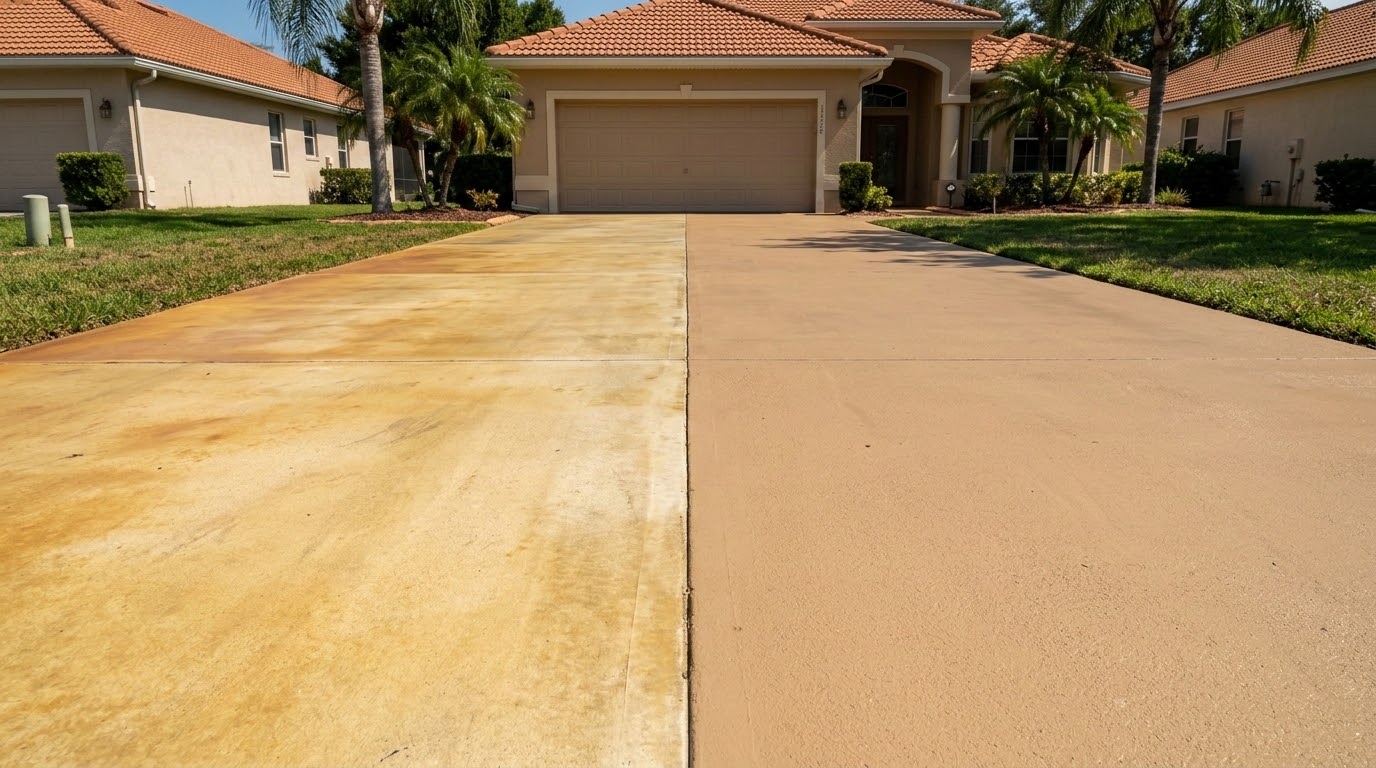
Aromatic epoxy isn’t UV stable. Direct sun ambers and dulls the topcoat within one to three years of exposure. Aliphatic (UV-stable) epoxies exist but cost significantly more and still lag polyurea in outdoor performance.
Polyurea’s UV performance depends on formulation. Aromatic polyurea also yellows under the sun; aliphatic polyurea is UV stable and holds color for the coating’s service life. For Orlando pool decks and driveways, an aliphatic polyurea or a polyaspartic (a subclass of polyurea) topcoat is the most durable outdoor concrete coating.
When it comes to chemical spills, epoxy has a slight advantage against harsh solvents and industrial fluids, making it popular in commercial mechanic shops. However, polyurea easily handles everyday residential spills (like oil, gasoline, and household cleaners) and actually offers better protection against corrosive household chemicals and battery acids.
When to Choose Each Coating
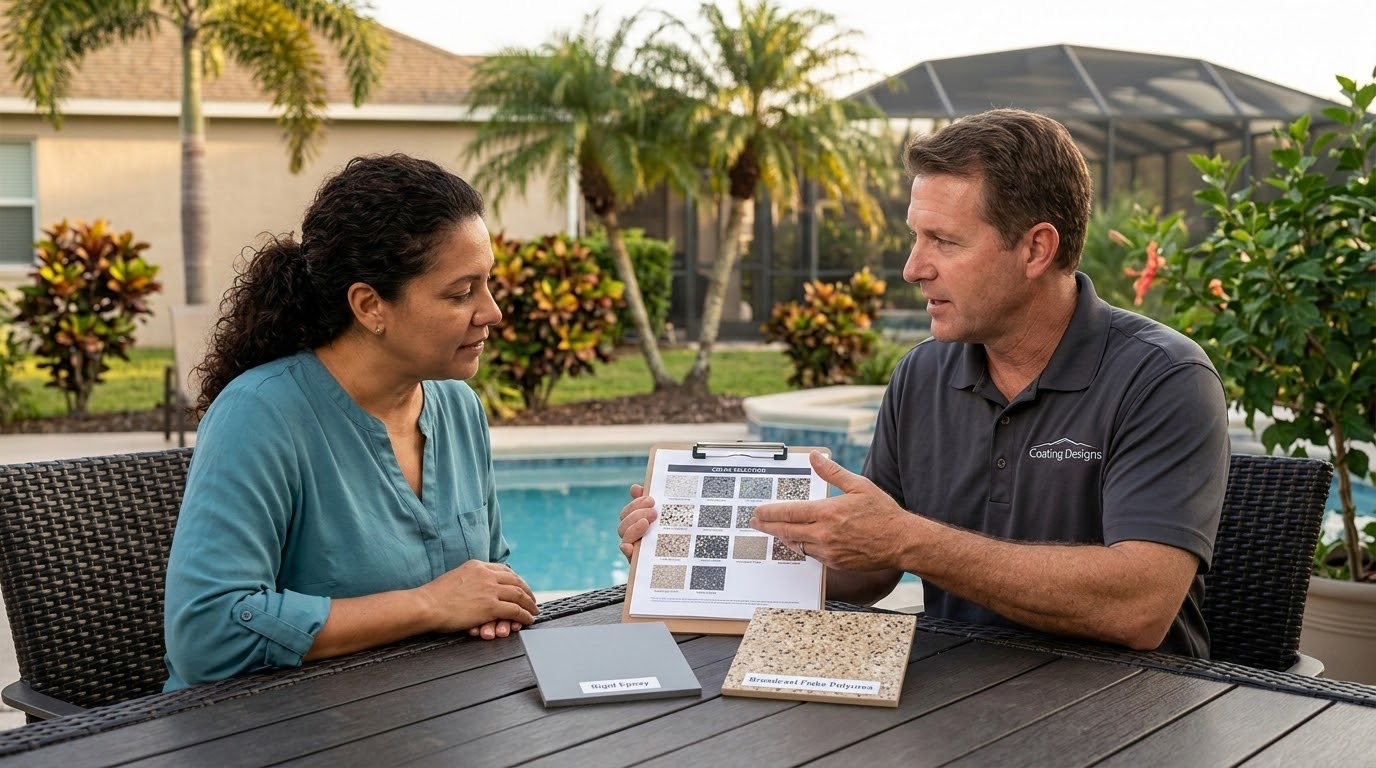
Match the coating to your specific surface and needs rather than picking what sounds newer.
Choose Epoxy When:
- The application is an interior floor, shaded garage, or workshop with heavy chemical exposure.
- There is no urgency around installation speed.
- You want a budget-driven refresh on interior surfaces where sunlight isn’t a factor.
Epoxy works best for indoor spaces that need a budget-friendly option and aren’t exposed to the sun. Understanding the core benefits of epoxy coatings helps you maximize their value in shaded, chemically intense environments where fast cure times aren’t a priority.
Choose Polyurea (or Polyaspartic) When:
- The surface sees direct sun, such as pool decks, driveways, or Orlando garages with south-facing doors.
- The slab has a history of minor shifting or movement.
- A one-day installation and same-day return-to-service are critical.
Polyurea is the go-to choice for outdoor surfaces that must endure extreme heat, direct sunlight, and minor concrete movement. It’s perfect if you can’t afford a multi-day project disruption and need your space back in service immediately.
The Best Overall System:
The strongest residential systems in Central Florida combine both technologies.
Using an epoxy base coat gives you excellent adhesion and thickness, while a polyaspartic clear topcoat provides UV stability and scratch resistance. This combination delivers the best of both chemistries on a single floor.
Frequently Asked Questions
Which coating is more expensive to install?
Polyurea and polyaspartic systems are generally more expensive to install than epoxy: roughly $6 to $10 per square foot for polyurea versus $4 to $8 for epoxy in the Orlando market. That premium buys you a longer service life and more time between recoatings, especially on exterior or sun-exposed surfaces where epoxy fails faster.
Can polyurea be applied over an existing epoxy floor?
Yes, polyurea can be applied over an existing epoxy floor because it bonds well to a sound, well-adhered epoxy substrate after light grinding. This is a common upgrade for Orlando homeowners whose original epoxy has ambered or is showing minor wear but the base coating is still bonded to the slab. Coating Designs handles this conversion regularly on residential garage floors.
Is polyurea safe for interior residential use?
Yes, polyurea is safe for interior residential use. Once cured, polyurea and polyaspartic coatings are inert, low-VOC, and safe for enclosed interior spaces. The fast cure means most homeowners can walk on the coating within hours of application and use the space normally the next day. Coating Designs uses formulations rated for residential interior use as standard practice.
Stop Guessing Which Coating Your Floor Needs

Picking the wrong chemistry for your floor means watching your investment peel, yellow, or crack within just a few years. Whether you need a UV-stable polyurea to handle the intense heat on your pool deck, or a heavy-duty hybrid system for your garage, matching the coating to your actual wear and tear is the only way to ensure it lasts.
Don’t leave your concrete to chance. Contact Coating Designs today at 1-888-8EPOXY8 to schedule your free, professional slab evaluation. We’ll inspect your concrete, test for moisture, and give you a firm, upfront price backed by our 25-year warranty.

Reinaldo Morera is the founder of Coating Designs in Orange County, FL. Specializing in advanced concrete coatings and decorative finishes, Reinaldo combines innovative technology with expert craftsmanship to transform ordinary floors into extraordinary spaces. He is a trusted local voice for those looking to enhance their property with resilient, low-maintenance flooring.