Non-slip pool deck coatings add textured traction to concrete surfaces around Orlando pools, reducing the risk of slips and falls on wet decks. Most systems cost $5 to $12 per square foot installed, depending on type of texture and coating chemistry. Coating Designs installs polyaspartic and epoxy pool deck coatings across Orange County, each with slip-resistant aggregates in the finish.
Puddles aren’t the main reason Orlando pool decks get slippery. Standard concrete sealers create a film that turns glassy when wet, and daily afternoon storms make that film dangerous year-round. Once UV breaks down the sealer’s surface texture, even light moisture turns a sealed deck into a hazard. We review three coating systems in this blog post, rating each in terms of barefoot traction, UV stability, and the ability to withstand year-round humidity.
Why Orlando Pool Decks Lose Traction

Orlando’s afternoon thunderstorms drop rain on pool decks that may not fully dry before the next day’s use. Standard concrete sealers, including acrylics and thin-film silicones, create a smooth barrier that repels water initially but turns glassy when wet. UV radiation from Central Florida’s 230-plus sunny days per year accelerates the breakdown of that barrier, leaving micro-smooth patches where traction disappears first.
The real failure is surface profile, not just moisture. Bare concrete has tiny peaks and valleys that give feet grip. A sealer fills those valleys. A coating system designed for pool decks does the opposite: it adds texture through aggregate broadcasting or flake chips that maintain grip even when water sits on the surface.
Coating Systems Built for Wet Surfaces
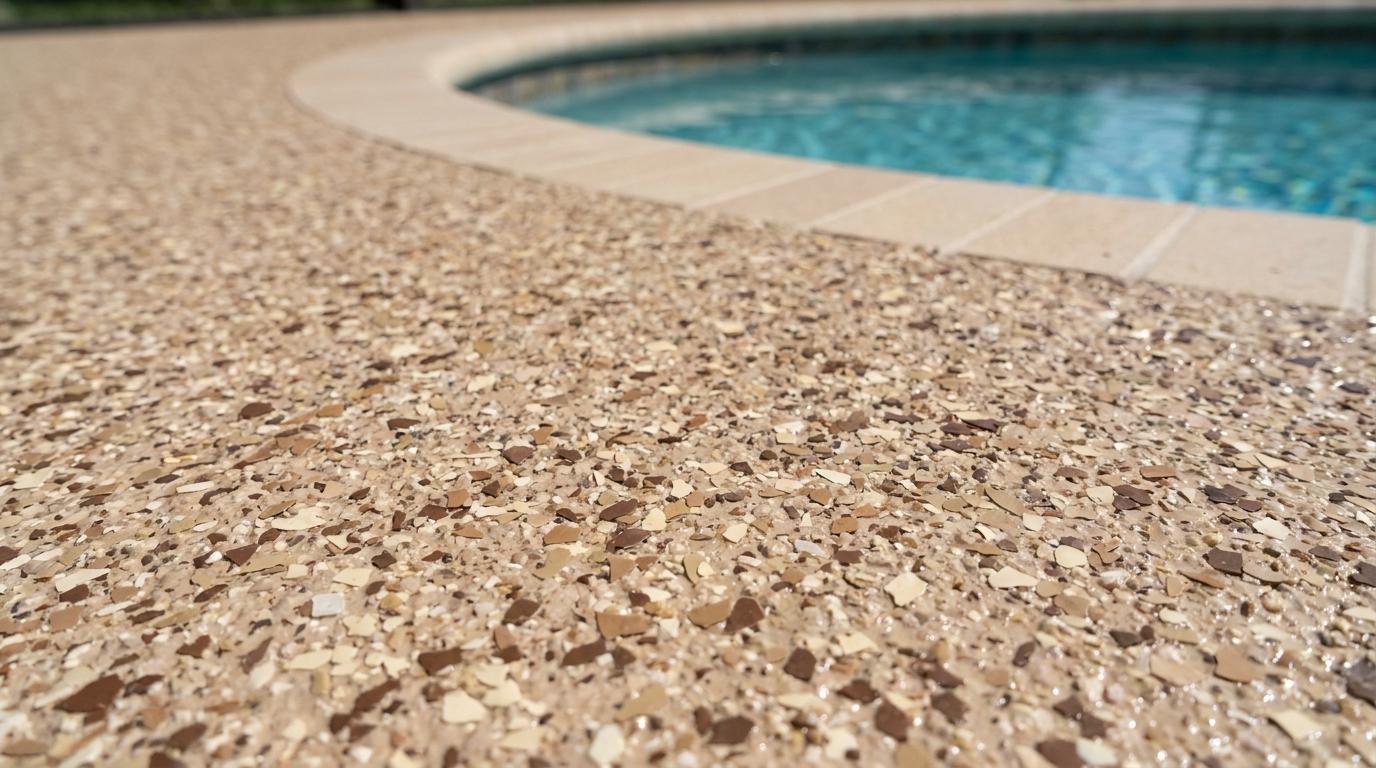
Each system below uses a different method to keep the surface safe underfoot.
Polyaspartic with Aluminum Oxide Broadcast
A polyaspartic base coat is applied, then fine aluminum oxide or silica aggregate is broadcast into the wet coating. The aggregate particles protrude slightly above the surface, creating grip points that work whether the deck is wet or dry. Polyaspartic resists UV yellowing and cures in a single day, which means less downtime around the pool. Due to its exceptional outdoor durability, Coating Designs uses this system on pool decks across Orlando and Orange County.
Epoxy Flake with Textured Topcoat
An epoxy base receives a full or partial broadcast of vinyl flake chips, then a clear polyaspartic or polyurethane topcoat seals them in. The flake layer itself adds surface texture, and the topcoat can include additional anti-slip aggregate for higher traction. This system offers more color and pattern variety than a broadcast-only approach.
Acrylic Spray Texture (Cool Deck Style)
A cementitious acrylic overlay is spray-applied to create a knockdown or orange-peel texture. This option stays cooler underfoot than epoxy or polyaspartic because the texture creates micro-shadows that reduce heat absorption. It costs less per square foot ($4 to $7) but requires resealing every two to three years in Florida’s climate.
Choosing the Right Texture for Barefoot Traffic
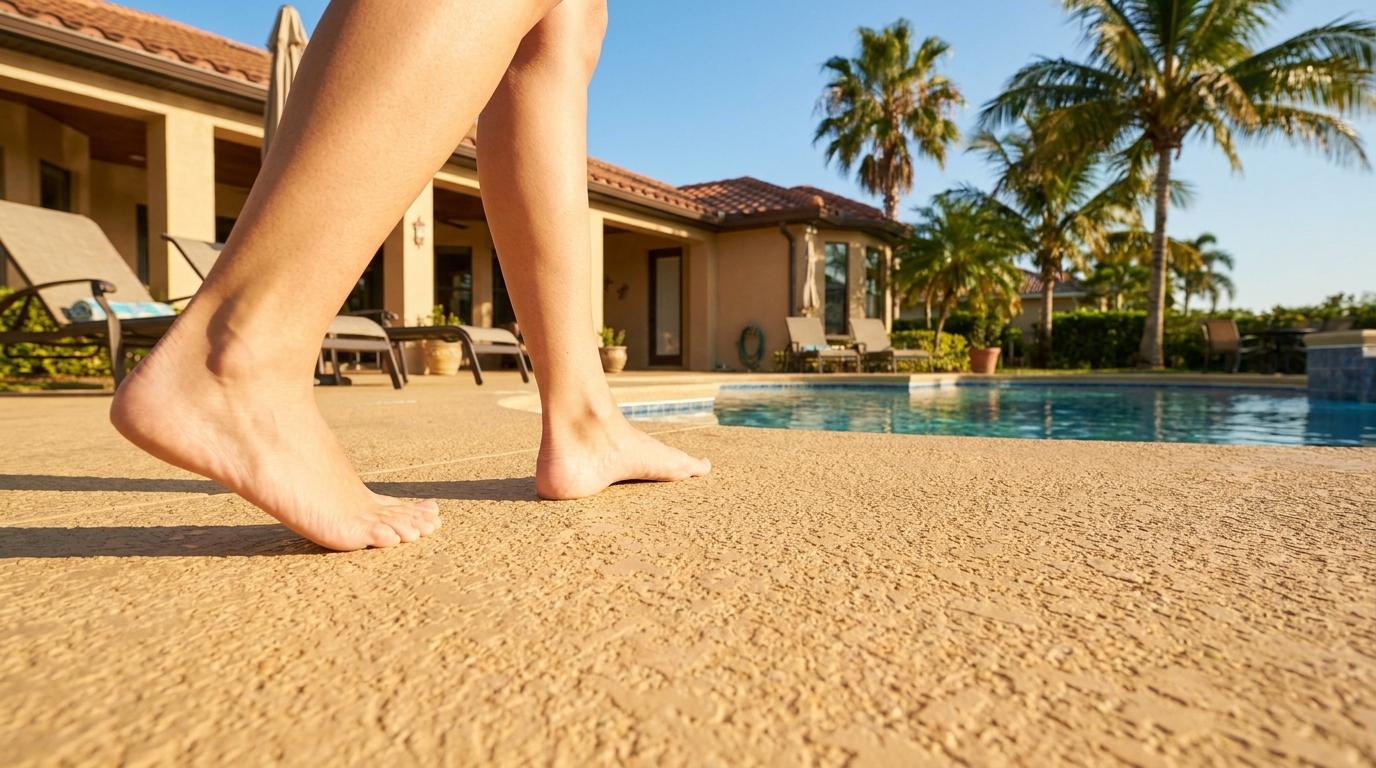
Slip resistance and barefoot comfort pull in opposite directions. A heavily textured surface grips well but can feel rough after hours of barefoot traffic around a pool. A lighter texture feels better underfoot but offers less traction when wet.
For most Orlando residential pool decks, a medium-aggregate polyaspartic broadcast hits the balance point. It scores above 0.60 on the DCOF (Dynamic Coefficient of Friction) scale, which is the threshold the tile industry uses for wet areas, without feeling abrasive. Flake systems with a lightly textured topcoat land in the same range and add more design flexibility.
Acrylic spray textures feel the softest but need regular resealing to maintain their pool deck coating lifespan in Florida. Once that seal wears down, the traction drops and the surface starts absorbing pool chemicals and staining.
Frequently Asked Questions
How long do non-slip pool deck coatings last in Florida?
Non-slip pool deck coatings in Florida typically last 8 to 15 years, depending on the coating chemistry and maintenance schedule. Polyaspartic systems hold up the longest because they resist UV degradation and don’t require frequent resealing. Acrylic spray textures need resealing every two to three years, and skipping that step cuts their effective lifespan to five years or less.
Can you add slip resistance to an existing pool deck coating?
You can add slip resistance to an existing pool deck coating by applying a fresh polyaspartic topcoat with anti-slip aggregate broadcast into it. The existing coating must be in good condition with no peeling, bubbling, or major cracks. Coating Designs inspects the current surface before recommending whether a topcoat addition or full recoat makes more sense for the deck’s condition.
Does a textured pool deck coating get too hot to walk on barefoot?
A textured pool deck coating stays cooler than bare sealed concrete because the texture creates tiny shadows that reduce direct heat absorption. Acrylic spray textures run the coolest, followed by light-colored flake systems. Dark-colored coatings absorb more heat regardless of texture, so lighter shades perform better around Windermere and Orlando pools where summer surface temperatures exceed 130 degrees on unshaded slabs.
Choose the Pool Deck Coating Built for Orlando Weather

The right pool deck coating keeps your surface safe without forcing you to choose between traction and comfort. Polyaspartic systems offer the longest lifespan and strongest UV resistance. Flake systems add design variety. Acrylic textures cost less upfront but need regular maintenance to hold their grip.
For a free estimate on non-slip pool deck coatings in Orlando, contact Coating Designs online or call 1-888-8EPOXY8.

Reinaldo Morera is the founder of Coating Designs in Orange County, FL. Specializing in advanced concrete coatings and decorative finishes, Reinaldo combines innovative technology with expert craftsmanship to transform ordinary floors into extraordinary spaces. He is a trusted local voice for those looking to enhance their property with resilient, low-maintenance flooring.