“Epoxy driveway coating” is one of the most searched options for concrete resurfacing, but standard epoxy has well-documented limitations on outdoor surfaces exposed to Florida’s UV and heat. For driveways in the Orlando area, polyaspartic and polyurea systems outperform epoxy on every metric that matters outdoors. Coating Designs installs driveway coatings across Orlando and Orange County using systems built specifically for Florida’s climate.
Most homeowners searching for “epoxy driveway coating” assume epoxy is the only professional-grade option. It makes sense. Epoxy dominates the conversation, it’s what the hardware store sells, and it’s what most online guides recommend. But here’s what those guides leave out: standard epoxy is an aromatic resin. Aromatic resins yellow, chalk, and degrade under sustained UV exposure. In Central Florida, where driveways sit in direct sun for eight or more hours a day most of the year, that degradation can begin sooner than most homeowners expect.
Where Epoxy Works… and Where It Fails
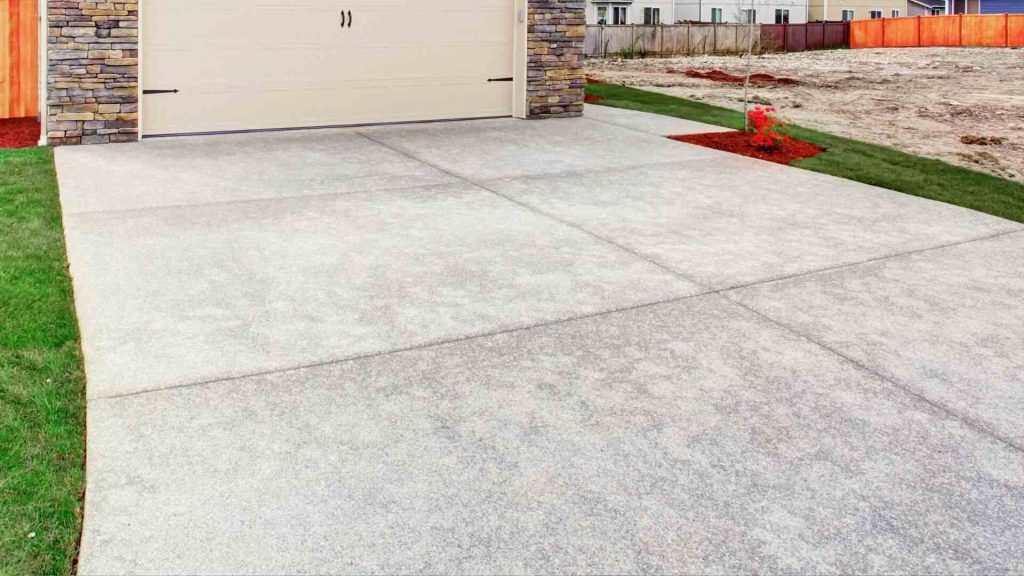
Epoxy is a strong, affordable coating for indoor applications. In a garage with no direct sun exposure, epoxy performs well: it’s hard, chemical resistant, and available in a wide range of colors and finishes. That’s why it’s the standard for garage floor coatings.
On a driveway, the equation changes. Epoxy’s strengths (hardness, chemical resistance) still apply, but its weaknesses (UV sensitivity, rigidity, slow cure) become liabilities.
Yellows Under UV Light
UV yellowing is the most visible problem. An epoxy driveway that looks bright white or light gray at installation can begin shifting toward amber within the first year of sun exposure. The coating doesn’t fail structurally, but the appearance degrades enough that most homeowners consider it a failure.
May Crack With Slab Expansion and Contraction
Rigidity causes the structural problem. Florida driveways expand and contract as surface temperatures cycle from mid-90s during the day to 70s at night. Epoxy is rigid. It doesn’t flex with the concrete. Over time, micro-cracks can form in the coating, allowing moisture in and increasing the risk of delamination. For a detailed look at how epoxy and polyaspartic compare on every performance metric, our polyaspartic vs. epoxy comparison covers the full breakdown.
Curing Can Take Up To 3 Days
Slow cure creates a practical problem. Epoxy takes 24 to 72 hours to cure before vehicle traffic. In Florida’s humid conditions, that cure window is longer than in dry climates. A driveway out of service for three days is a meaningful inconvenience.
What Performs Better on Florida Driveways
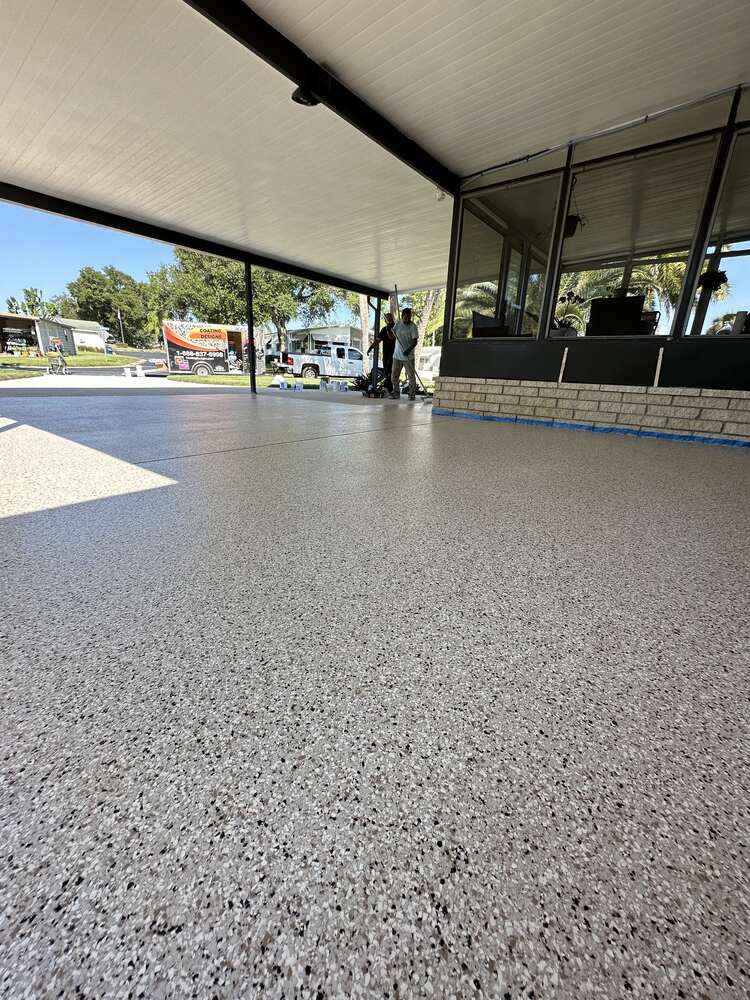
Polyaspartic and polyurea coatings solve the three problems epoxy creates outdoors.
Polyaspartic is an aliphatic resin, meaning it’s UV stable by chemistry. It won’t yellow, chalk, or fade under Florida sun. It’s more flexible than epoxy, so it moves with the concrete through thermal cycling instead of cracking apart on top of it. And it cures in two to four hours, meaning the driveway is walkable the same day and ready for vehicles within 24 hours.
Polyurea offers similar UV resistance and even faster cure times. It’s often used as a base coat in a two-part system with a polyaspartic topcoat. The combination creates a surface that’s strong, flexible, UV stable, and slip resistant with aggregate broadcast.
Both systems cost more per square foot than epoxy. The price difference is real. But for an outdoor surface in Orlando that needs to look good and hold up for a decade or more, the upfront savings of epoxy can disappear if the coating needs to be stripped and replaced within a few years.
Cost Comparison: Epoxy vs. Polyaspartic for Driveways

For a standard two-car driveway (400 to 600 square feet) in the Orlando area:
- Epoxy system: $1,600 to $4,200 installed
- Polyaspartic or polyurea system: $2,400 to $6,000 installed
Over ten years, a polyaspartic installation that holds without recoating costs less total than two or three epoxy applications that each require surface prep, material, and labor. Our concrete coating cost guide covers pricing across all surfaces and systems.
Frequently Asked Questions
Can epoxy be used on a driveway in Florida?
Epoxy can be applied to a driveway, but it isn’t the best choice for outdoor surfaces in Florida. Standard epoxy yellows under UV exposure, cracks from thermal cycling, and takes days to cure in humid conditions. It works well in garages and indoor spaces where UV isn’t a factor. For driveways in direct sun, polyaspartic or polyurea systems deliver better long-term results.
How long does an epoxy driveway coating last in Orlando?
In Orlando’s climate, an epoxy driveway coating often shows visible yellowing within the first one to two years and may begin delaminating sooner than expected due to UV degradation and thermal stress. A polyaspartic system on the same driveway carries manufacturer ratings of 15 to 20 years because it’s formulated to handle the conditions that cause epoxy to fail outdoors.
Is polyaspartic worth the extra cost over epoxy for a driveway?
For outdoor surfaces in Central Florida, yes. The upfront cost difference between epoxy and polyaspartic is typically 30% to 50%, but polyaspartic lasts significantly longer without yellowing, cracking, or requiring recoating. Coating Designs backs its driveway installations with a 25-year warranty, which reflects the system’s expected performance in Florida conditions.
Choose the System That Handles Florida’s Conditions
Epoxy is a capable indoor coating. On a Florida driveway, it’s the wrong tool for the job. Polyaspartic and polyurea handle UV, heat, moisture, and thermal cycling without the downsides that make epoxy a short-term solution on exposed concrete.
Orlando homeowners can get a free estimate from Coating Designs to see what the right system costs for their driveway

Reinaldo Morera is the founder of Coating Designs in Orange County, FL. Specializing in advanced concrete coatings and decorative finishes, Reinaldo combines innovative technology with expert craftsmanship to transform ordinary floors into extraordinary spaces. He is a trusted local voice for those looking to enhance their property with resilient, low-maintenance flooring.