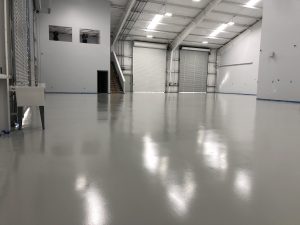
The best commercial kitchen flooring for Orlando restaurants in 2026 is a seamless, slip-resistant system that handles grease, thermal shock, chemical cleaners, and constant foot traffic without degrading. Epoxy, urethane cement, and polyaspartic coatings are the top-performing options for Central Florida food service environments. Coating Designs installs commercial kitchen floor coatings for restaurants and food service businesses across Orlando and Orange County.
A kitchen floor failure in a restaurant doesn’t announce itself with a dramatic event. It starts with a worn spot near the fryer that gets slippery during the dinner rush. Then, a seam lifts near the walk-in and catches the edge of a cart wheel. A health inspector later flags the cracking surface as a sanitation risk because its gaps can harbor bacteria. By the time the floor is visibly failing, it’s already been a liability for months. The right flooring system prevents that chain of events from starting.
What Commercial Kitchen Floors Have to Handle
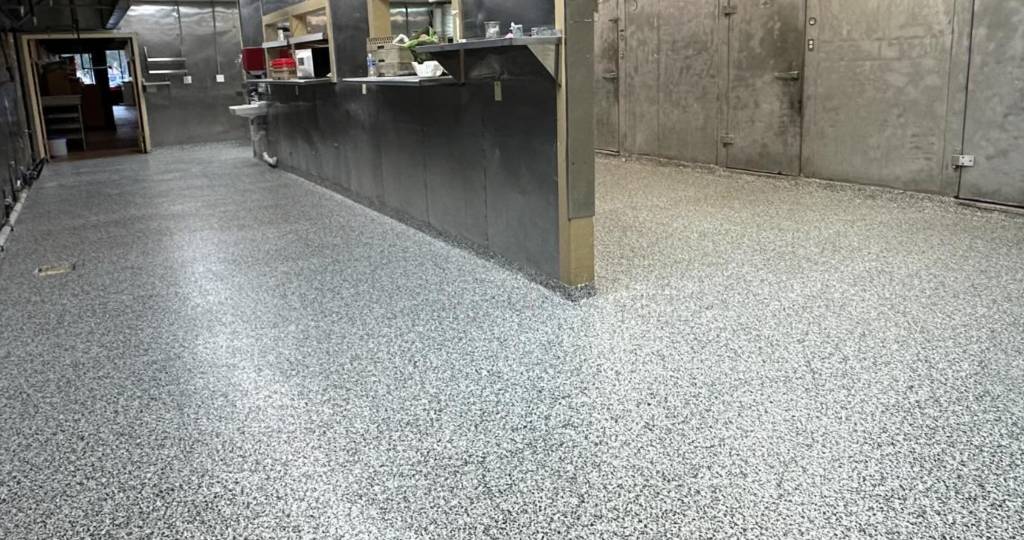
A restaurant kitchen floor faces conditions that no residential surface deals with.
Thermal Shock
Boiling water, hot grease, and 400-degree fryer oil can splash onto the floor within seconds of a 35-degree blast from an open walk-in cooler. A flooring system that can’t handle those temperature swings can develop micro-cracking over time.
Chemical Exposure
Commercial kitchen floors get hit with degreasers, sanitizers, citric acid from food prep, and alkaline cleaning solutions during every closing shift. A surface that reacts to those chemicals tends to degrade faster than traffic alone would cause.
Moisture
Between dishwashing spray, floor washing, condensation from refrigeration, and spills, a kitchen floor is wet for most of its operating hours. In Orlando, where ambient humidity is already high, moisture has even less opportunity to evaporate.
Slip Resistance
OSHA and local health codes require commercial kitchen floors to maintain adequate traction under wet and greasy conditions. A floor that passes inspection when new but loses texture as it wears creates an escalating liability.
The Best Flooring Systems for Orlando Restaurant Kitchens

Three coating systems handle the demands of a commercial kitchen in Central Florida. Each has a specific advantage that makes it the right fit for different kitchen environments.
Epoxy Floor Coatings
Epoxy creates a seamless, non-porous surface that resists chemicals, stains, and abrasion. It bonds to properly prepared concrete and can be customized with color, flake, and anti-slip aggregate. For kitchens with moderate traffic and standard cleaning protocols, epoxy delivers strong performance at a competitive price point.
The limitation for high-volume kitchens is thermal shock resistance. Standard epoxy can soften or crack under repeated exposure to extreme temperature swings. Kitchens with heavy frying or frequent boiling water contact should consider urethane cement instead. Our commercial floor coatings page covers the full range of systems Coating Designs installs for commercial environments.
Urethane Cement Coatings
Urethane cement is the heavy-duty option for the most demanding kitchen environments. It handles thermal shock from sub-zero to boiling without cracking, resists the broadest range of chemicals, and tolerates higher moisture content in the concrete substrate during installation. For high-volume restaurant kitchens, commercial bakeries, and food processing facilities in the Orlando area, urethane cement is the system that holds up under conditions that degrade other options.
The trade-off is cost and aesthetics. Urethane cement is more expensive than epoxy and offers fewer decorative options. For a kitchen where function and code compliance matter more than appearance, that trade-off is straightforward.
Polyaspartic Coatings
Polyaspartic coatings cure in two to four hours, allowing a restaurant to return to operation faster after installation. They’re UV stable (relevant for kitchens with natural light or glass-front areas), chemically resistant, and flexible enough to handle Florida’s thermal cycling. Anti-slip aggregate broadcast into the topcoat provides wet-surface traction.
For Orlando restaurants that can’t afford extended downtime during installation, polyaspartic offers the fastest turnaround. It’s also a strong choice for front-of-house kitchen areas where appearance matters alongside performance.
What About Polished Concrete?
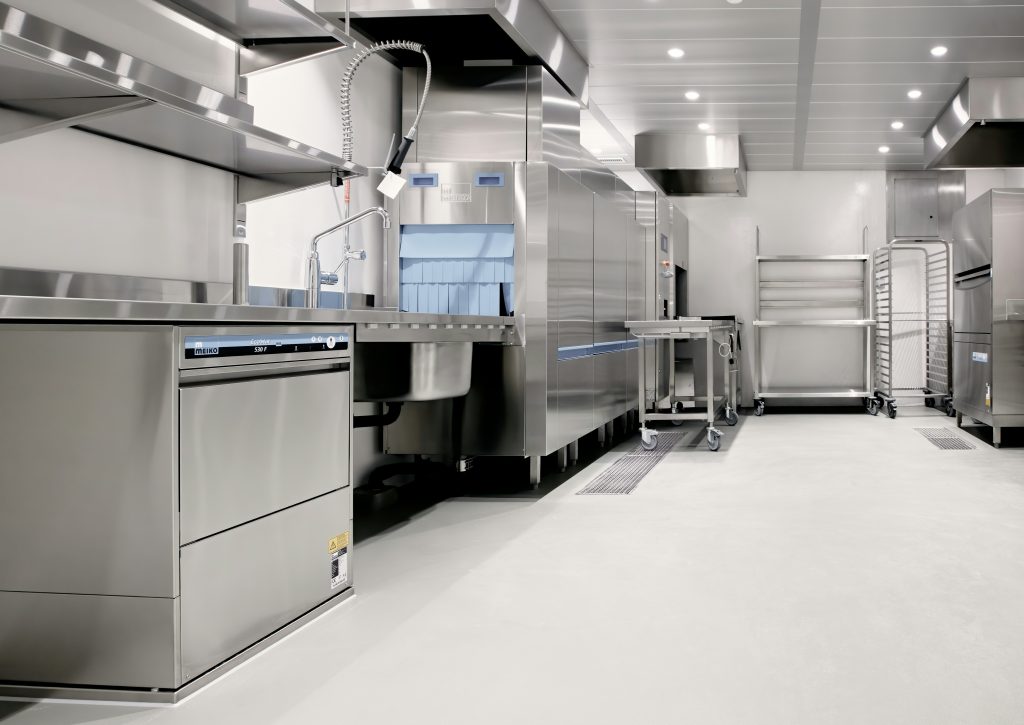
Polished concrete works in certain commercial kitchen environments, but it’s less common than coated systems for high-volume food prep areas. The surface is hard, durable, and easy to clean, but it lacks the chemical resistance and thermal shock tolerance of epoxy or urethane cement.
It’s better suited to open-concept restaurant dining areas that transition into kitchen spaces, where aesthetics and function need to coexist. For more on how safety and compliance factor into commercial flooring decisions, our commercial safety and compliance guide covers what restaurant owners need to know.
Frequently Asked Questions
What is the best flooring for a commercial kitchen in Florida?
For most Orlando restaurant kitchens, urethane cement or epoxy coatings are the best options. Urethane cement handles the most extreme conditions (heavy thermal shock, aggressive chemicals, constant moisture), while epoxy delivers strong performance at a lower cost for kitchens with moderate demands. Coating Designs evaluates each kitchen’s specific conditions during the free estimate to recommend the right system.
How long does commercial kitchen flooring last?
A professionally installed epoxy kitchen floor carries industry lifespan estimates of 7 to 15 years depending on traffic and maintenance. Urethane cement systems carry ratings of 15 to 20 years or more under similar conditions. Both require proper surface preparation before installation and routine cleaning to reach their full lifespan. Coating Designs backs commercial kitchen installations with a 25-year warranty.
Can a restaurant stay open during kitchen floor installation?
Partial operation is possible in some cases. Kitchens can be sectioned off so one area is coated while the other remains in use. Polyaspartic systems cure in two to four hours, which minimizes downtime. Epoxy and urethane cement require longer cure times (24 to 72 hours) before the surface can handle full kitchen traffic. Coating Designs works with restaurant owners to plan installation schedules that minimize business disruption.
Get Your Kitchen Floor Up to Standard
The floor is the most used surface in a commercial kitchen, and it’s the one most likely to create a safety or compliance issue if it’s not built for the environment. Epoxy, urethane cement, and polyaspartic each solve the problem differently depending on the kitchen’s demands.
Orlando restaurant owners can schedule a free estimate with Coating Designs to find out which system fits their kitchen, their budget, and their timeline.

Reinaldo Morera is the founder of Coating Designs in Orange County, FL. Specializing in advanced concrete coatings and decorative finishes, Reinaldo combines innovative technology with expert craftsmanship to transform ordinary floors into extraordinary spaces. He is a trusted local voice for those looking to enhance their property with resilient, low-maintenance flooring.