Two coatings dominate Florida patio projects: epoxy at $3 to $7 per square foot and polyaspartic at $5 to $12. The price difference reflects their performance. Epoxy bonds well to prepared concrete but yellows under direct UV within two to four years on an exposed patio. Polyaspartic resists ultraviolet degradation and typically lasts 15 to 20 years on the same slab. Coating Designs coats patios across Orange County with both epoxy and polyaspartic systems, selecting the chemistry based on each slab’s sun exposure.
The split between the two systems widens under Orlando’s UV index, which exceeds 10 for nearly half the year. Afternoon storms add moisture stress from above while vapor transmission pushes from below. We compare both systems below to answer the ultimate question: which one withstands Florida’s heat and look great doing it?
How Florida’s Climate Tests Patio Coatings Differently
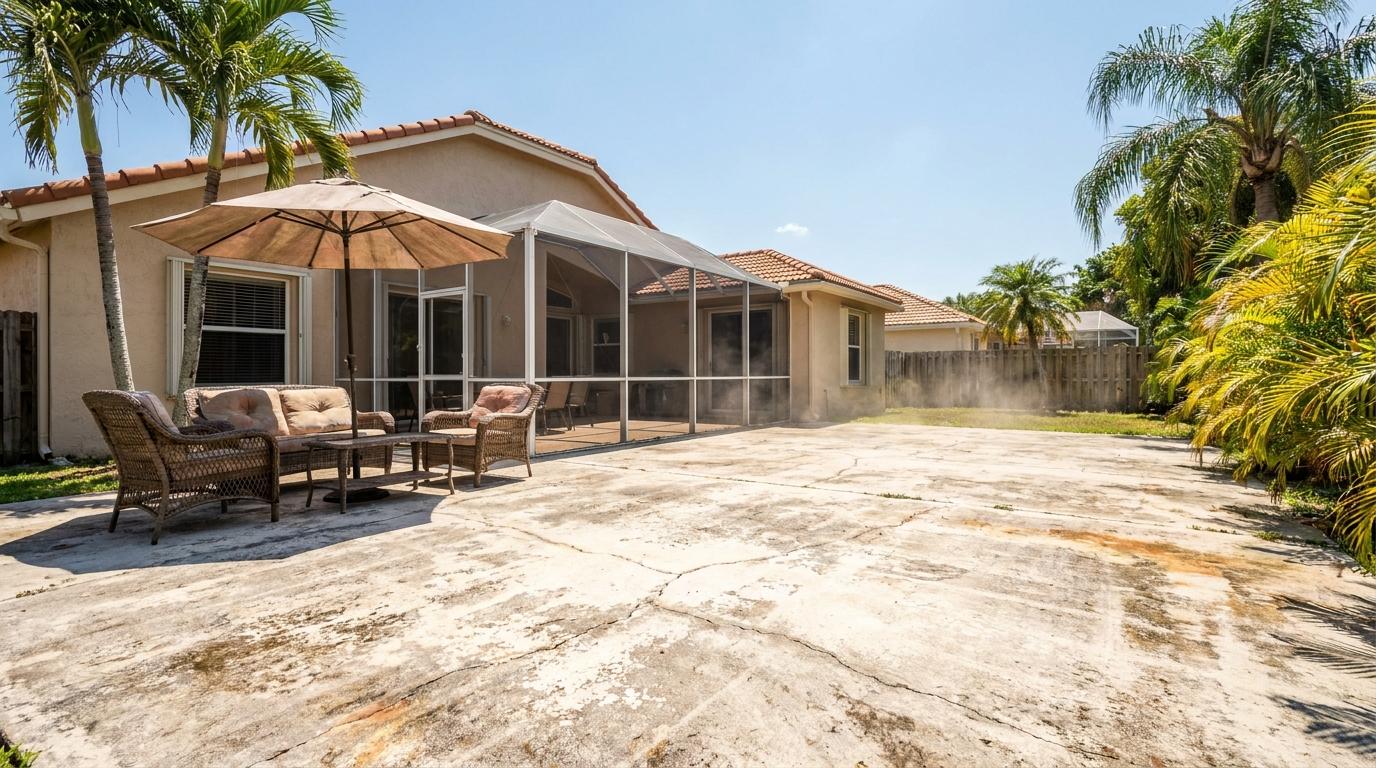
Florida patios take more UV punishment than any indoor surface. Orlando averages 233 sunny days per year, and exposed concrete surface temperatures routinely hit 140 degrees in summer. Standard epoxy resin breaks down under sustained UV. The molecular bonds weaken, the surface yellows, and the finish chalks within two to four years.
Rain makes the problem worse. Moisture vapor pushes through Florida slabs year-round, and if the coating can’t handle that vapor transmission, it blisters from underneath. The polyaspartic vs epoxy coatings comparison comes down to which chemistry tolerates UV and moisture simultaneously.
Polyaspartic vs. Epoxy: Side-by-Side on Florida Patios
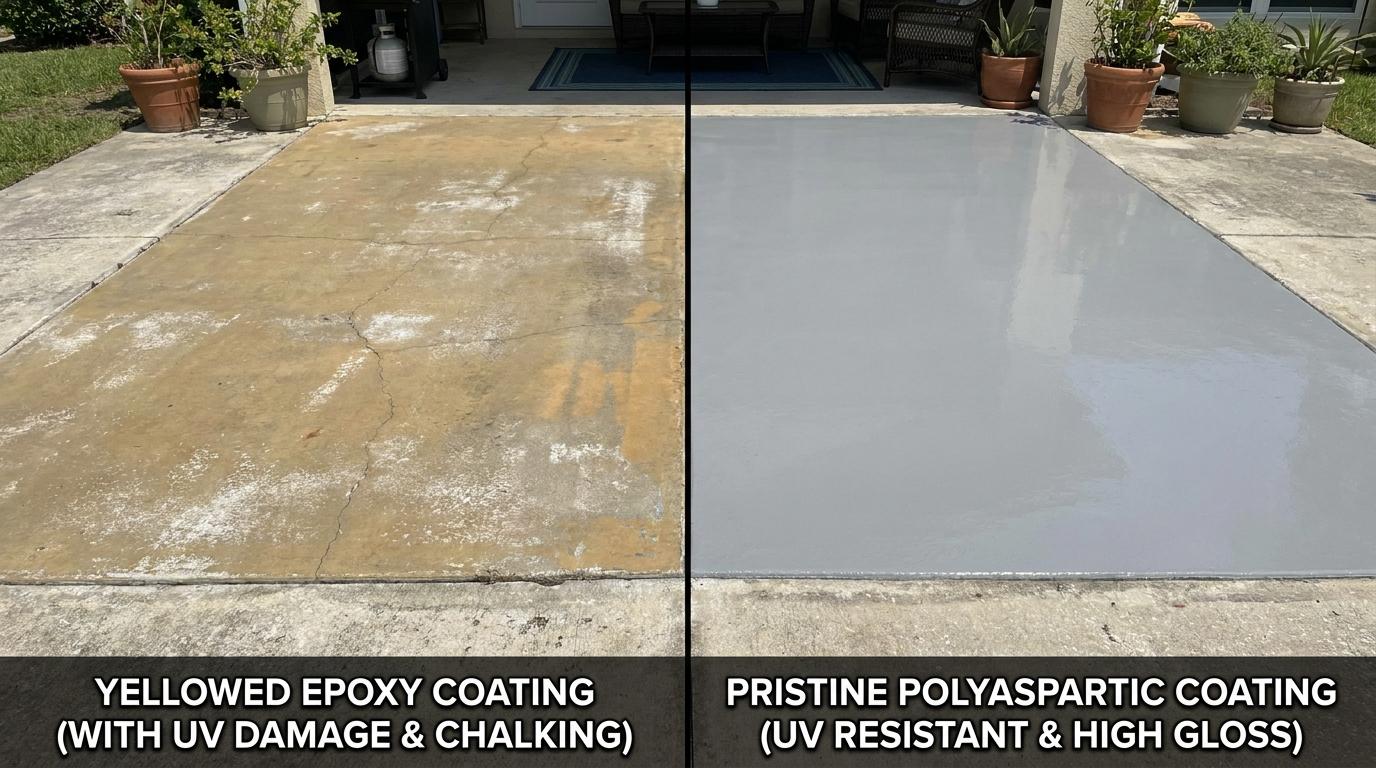
Both coatings bond to properly prepared concrete, but they perform very differently once Florida’s sun and rain go to work on the surface.
UV Resistance and Color Stability
Epoxy yellows and chalks under direct UV because the resin isn’t formulated to resist ultraviolet radiation. Within two to four years on a Florida patio, the surface loses its original color and develops a powdery texture. Polyaspartic coatings are UV stable. The resin chemistry resists ultraviolet degradation, which means the color and gloss hold through years of full-sun exposure.
Cure Time and Installation Speed
Epoxy requires 12 to 16 hours between coats and three to five days before the surface can handle foot traffic. Polyaspartic cures in four to six hours and is walkable the same day. For a patio that sees daily use, that’s the difference between a week out of service and a single afternoon.
Cost per Square Foot and Long-Term Value
Epoxy costs $3 to $7 per square foot installed. Polyaspartic costs $5 to $12 per square foot. The upfront gap narrows when you factor in longevity. Epoxy on an outdoor patio typically lasts three to five years before it needs replacement. Polyaspartic typically lasts 15 to 20 years.Over a decade, the polyaspartic system costs less per year of service. It’s one of the best patio coating options for the Florida sun, offering a much higher return on investment for homeowners from Kissimmee to Orlando.
When Each System Makes Sense on a Florida Patio
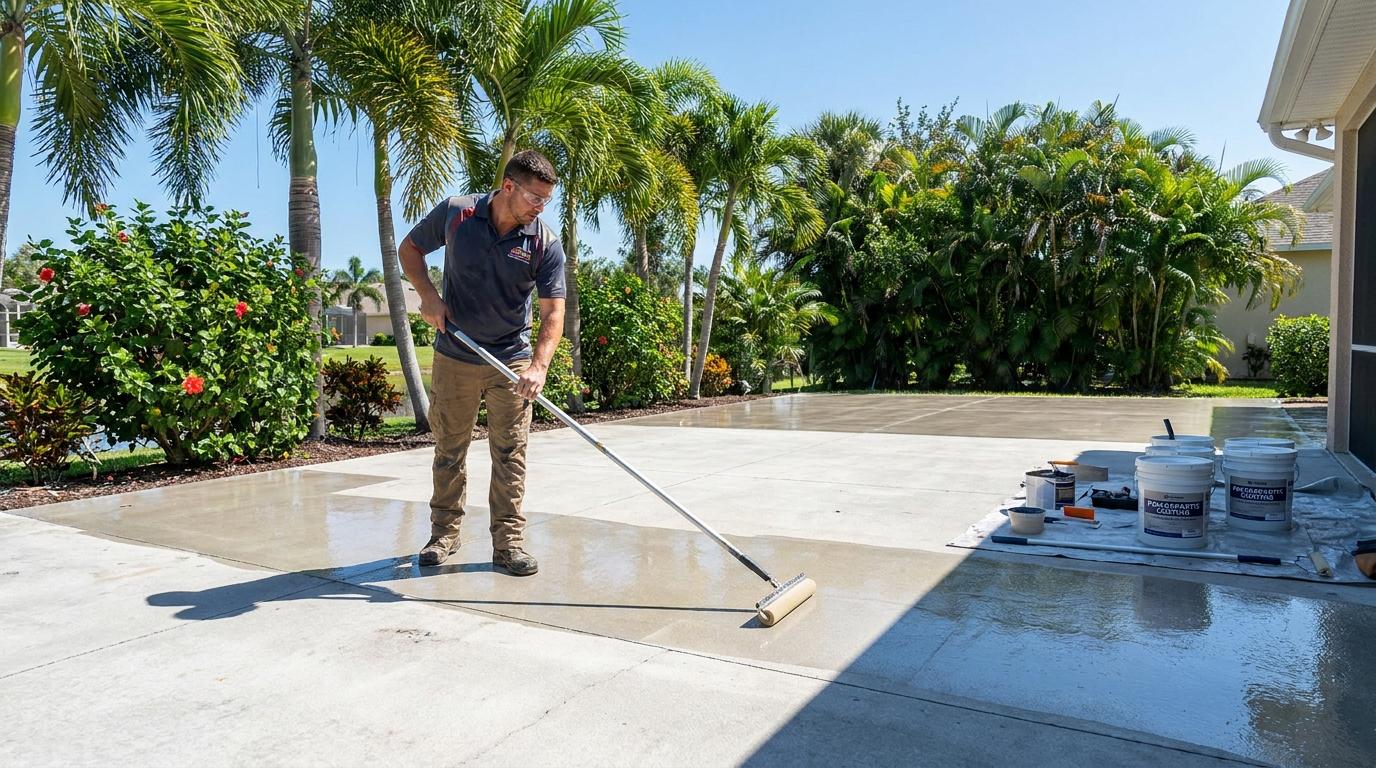
Epoxy works on covered patios, screened lanais, and shaded areas where UV exposure is limited. If the patio sits under a roof or screen enclosure, epoxy’s bond strength and lower cost make it a reasonable choice. Coating Designs installs epoxy systems on covered patios as long as the conditions support it.
For open-air patios in full sun, polyaspartic is the better investment. The UV stability, faster cure, and longer lifespan offset the higher upfront cost. The right choice depends on how much sun the slab gets and how long you want the coating to last.
Frequently Asked Questions
Is polyaspartic better than epoxy for a patio in Florida?
Polyaspartic is better than epoxy for open-air patios in Florida because it resists UV degradation, cures in a single day, and lasts 15 to 20 years without yellowing. Epoxy breaks down under direct sunlight within two to four years. The only scenario where epoxy makes sense on a Florida patio is under a covered or screened structure where UV exposure is minimal.
How long does polyaspartic patio coating last in Orlando?
Polyaspartic patio coating in Orlando typically lasts 15 to 20 years when professionally installed with diamond grinding and proper moisture testing. The UV-stable resin chemistry prevents the yellowing and chalking that shortens epoxy’s outdoor lifespan. Coating Designs backs its polyaspartic patio systems with a 25-year warranty.
Can you apply epoxy to an outdoor patio in Florida?
You can apply epoxy to an outdoor patio in Florida, but it will yellow and chalk within two to four years of direct sun exposure. The resin isn’t UV-stable, so the finish degrades faster outdoors than in a garage or interior space. Covered or screened patios with limited UV exposure are the only outdoor settings where epoxy holds up long-term.
Match Your Patio to the Right Coating Chemistry
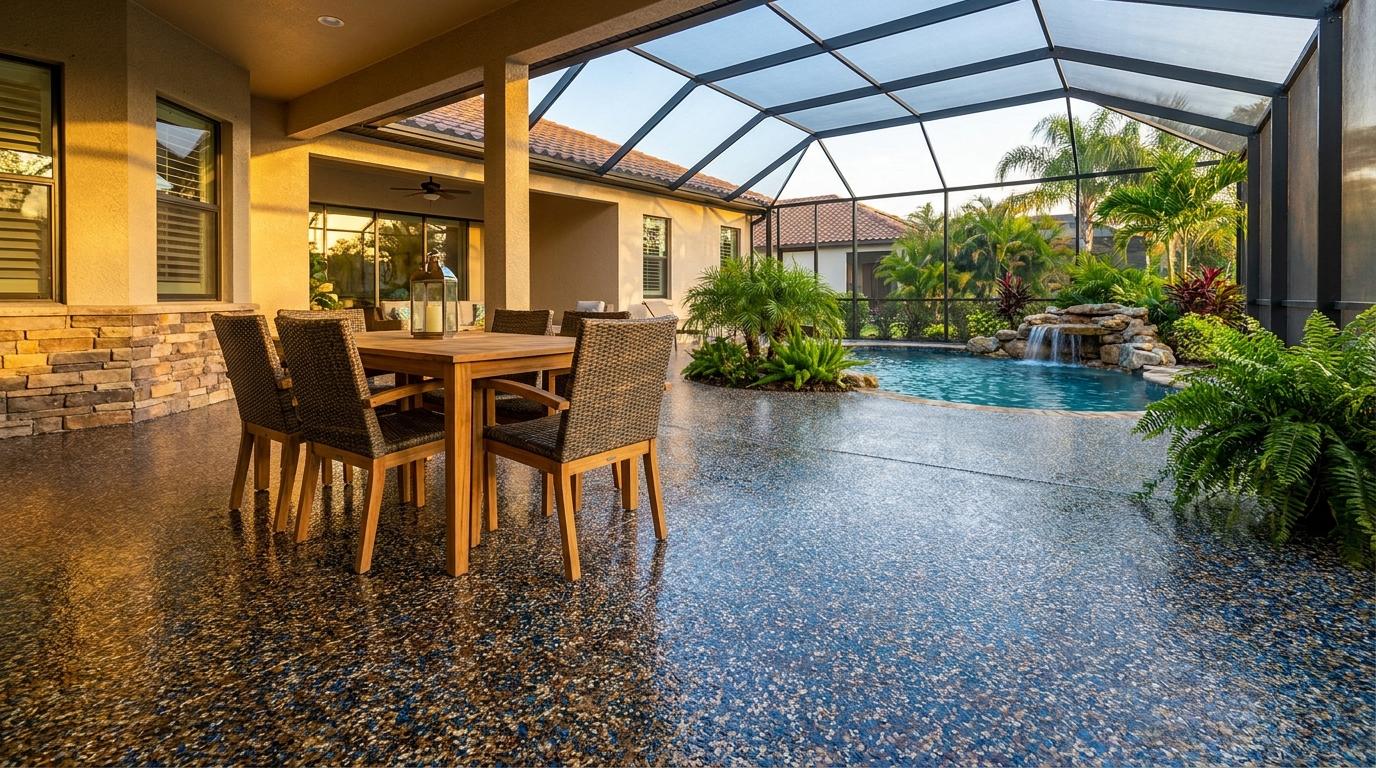
The choice between polyaspartic and epoxy on a Florida patio comes down to sun exposure. Slabs that receive full sun need polyaspartic’s UV stability and longer lifespan. Covered or screened patios can get away with epoxy’s lower upfront cost. Either way, diamond grinding and moisture testing determine whether the coating bonds permanently or peels within a year.
Contact Coating Designs for a free patio coating estimate. Call 1-888-8EPOXY8 for a free patio coating consultation to find out which system fits your patio’s sun exposure and your budget.

Reinaldo Morera is the founder of Coating Designs in Orange County, FL. Specializing in advanced concrete coatings and decorative finishes, Reinaldo combines innovative technology with expert craftsmanship to transform ordinary floors into extraordinary spaces. He is a trusted local voice for those looking to enhance their property with resilient, low-maintenance flooring.