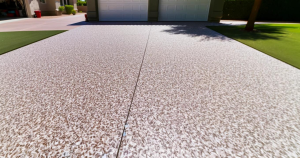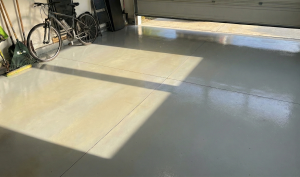
Designing a commercial kitchen requires careful attention to every detail, and choosing the right flooring is one of the most important decisions you’ll face. The right flooring can enhance safety, improve hygiene, and withstand the demanding environment of a busy restaurant, while the wrong choice can create safety hazards, sanitation issues, and costly repairs.
As experts in commercial kitchen flooring, we at Coating Designs have seen it all. In this guide, we’ll walk you through the best commercial kitchen flooring options to help you make an informed decision for your restaurant.
Why Commercial Kitchen Flooring Matters
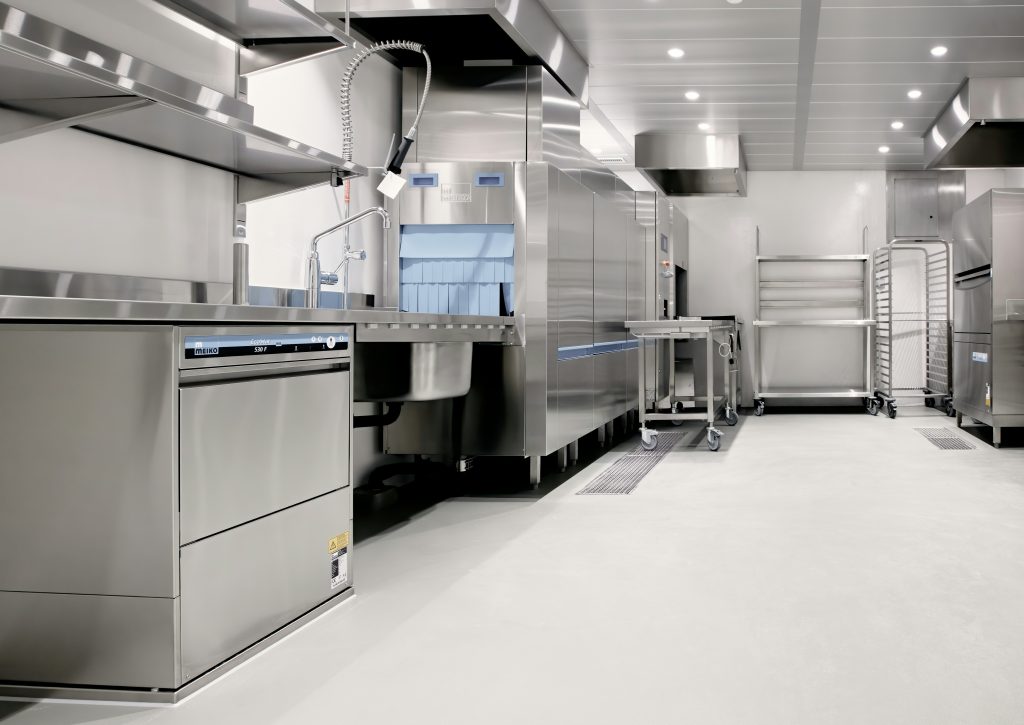
A commercial kitchen is a high-traffic area with unique challenges. Your flooring must be durable enough to withstand constant foot traffic and heavy equipment. It should also be slip-resistant to prevent accidents, hygienic with non-porous, seamless surfaces to inhibit bacteria growth, resistant to harsh chemicals and food spills, and capable of handling extreme temperature changes from cooking areas to freezers.
With these requirements in mind, let’s explore our recommended flooring options for restaurants.
Your Top Options for Commercial Kitchen Floors
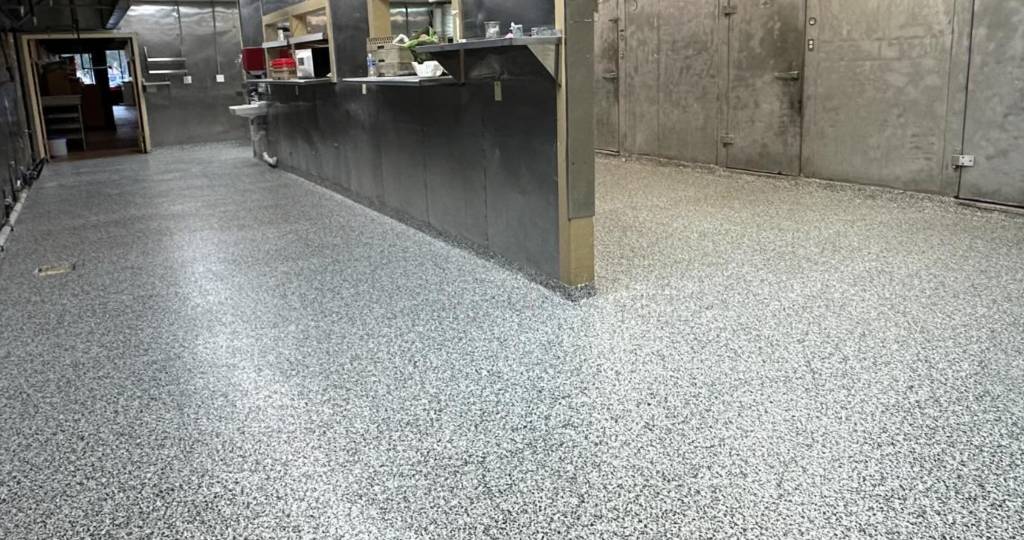
The right commercial kitchen flooring protects your staff, meets health codes, and stands up to the toughest restaurant conditions.
1. Epoxy Floor Coatings
An epoxy coating is a two-part system consisting of a resin and a hardener. When mixed, they undergo a chemical reaction that produces a hard, durable, and seamless surface. Our epoxy floor coatings are an excellent option for kitchens seeking easy-to-maintain, hygienic surfaces.
However, for extremely high-traffic commercial kitchens, urethane cement may provide superior long-term durability.
Pros of Epoxy Flooring
- Seamless and Hygienic: The seamless surface of an epoxy floor leaves no hiding places for bacteria, dirt, or grime, making it easy to clean and sanitize.
- Durable and Long-Lasting: Epoxy forms a hard, wear-resistant surface that withstands the daily rigors of a commercial kitchen.
- Chemical and Stain-Resistant: Resists a wide range of chemicals, oils, and food spills.
- Customizable: Epoxy coatings are available in a range of colors and finishes, allowing you to customize your kitchen’s appearance.
Cons of Epoxy Flooring
- Can be Slippery When Wet: Slip-resistant additives are essential. Professional installation ensures the right level of slip resistance.
- Installation Requires Expertise: Proper surface preparation is essential. Concrete must be clean, dry, and properly profiled for the epoxy to bond effectively.
2. Urethane Cement Coatings
For kitchens with the most demanding conditions, we often recommend urethane cement coatings. This heavy-duty flooring system combines the strength of concrete with the chemical resistance of urethane. It’s an industrial-strength solution that provides unparalleled durability.
Pros of Urethane Cement
- Extreme Durability: Urethane cement is highly resistant to impact, abrasion, and heavy traffic.
- Superior Thermal Shock Resistance: It withstands extreme temperature swings, making it ideal for areas near ovens, fryers, and freezers.
- Excellent Chemical Resistance: Resists a broad range of chemicals, including harsh sanitizers used in commercial kitchens.
- Moisture Tolerant: Urethane cement can be installed on concrete with slightly higher moisture content than epoxy, which can be a significant advantage in certain situations.
Cons of Urethane Cement
- Higher Cost: More expensive than epoxy, though its durability offers long-term value.
- Limited Aesthetics: Fewer decorative options compared to epoxy.
3. Polished Concrete
Polished concrete is another excellent option for commercial kitchens, offering a unique blend of style and durability. The process involves grinding and polishing the existing concrete slab to a smooth, high-gloss finish. A densifier or high-quality guard is then applied to protect the surface and make it easier to clean.
While it provides long-lasting performance, polished concrete is less common in busy kitchens compared to epoxy or urethane cement because it may be less safe and comfortable for staff.
Pros of Polished Concrete
- Aesthetically Pleasing: Modern, sophisticated look that elevates kitchen design.
- Durable: Lasts for decades with proper maintenance and periodic reapplication of densifier/guard.
- Low Maintenance: Easy to clean without waxing or stripping.
Cons of Polished Concrete
- Hard Surface: Footsteps, dropped utensils, and moving equipment can increase noise levels, which may be tiring for staff during long shifts.
- Requires Quality Protection: A densifier or guard and periodic maintenance are required to prevent staining.
Partner With Central Florida’s Kitchen Flooring Specialists
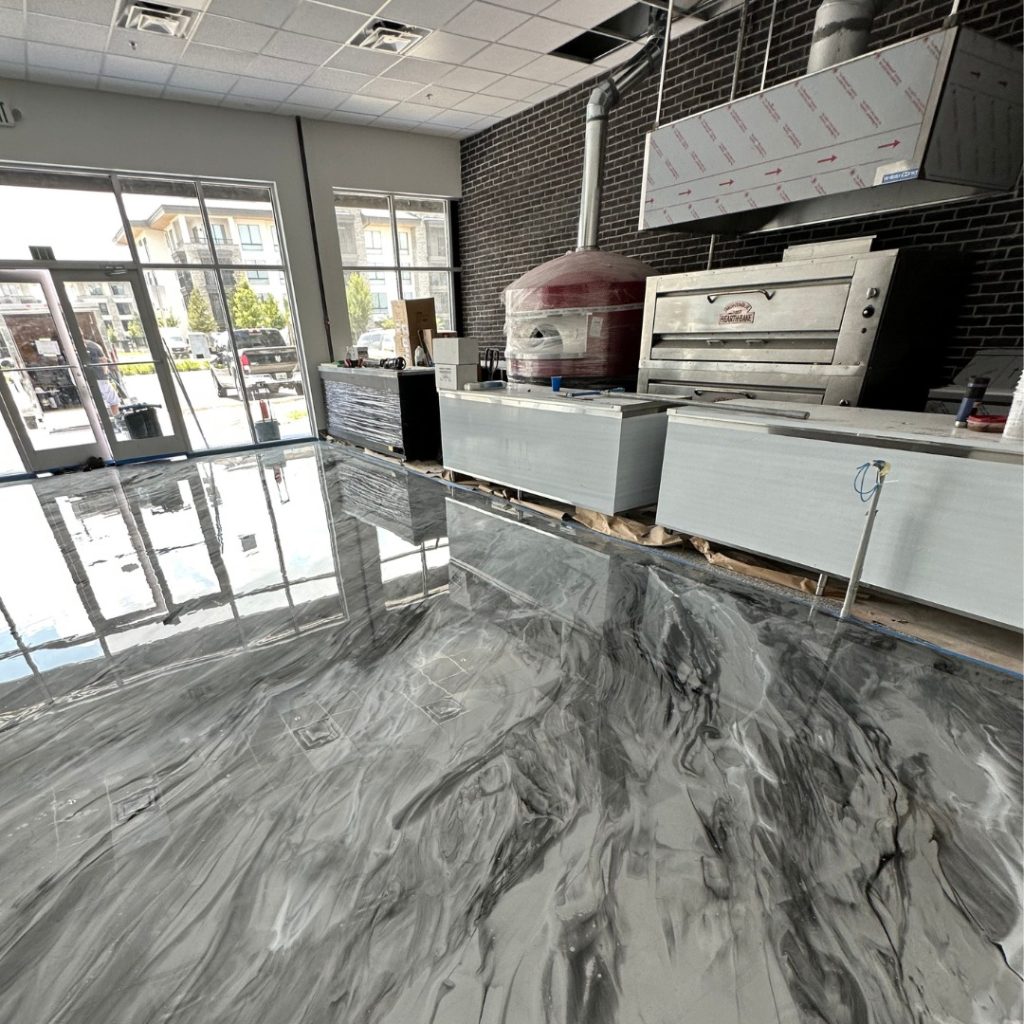
Choosing the right flooring for your commercial kitchen is a big decision, but you don’t have to make it alone. Coating Designs has the expertise and experience to help you select and install the perfect flooring system for your restaurant.
As a locally based flooring specialist, we support restaurants throughout Central Florida with dependable, high‑performance flooring systems. Contact us today for a free consultation and quote. We look forward to helping you create a kitchen that’s safe, hygienic, and built to last.